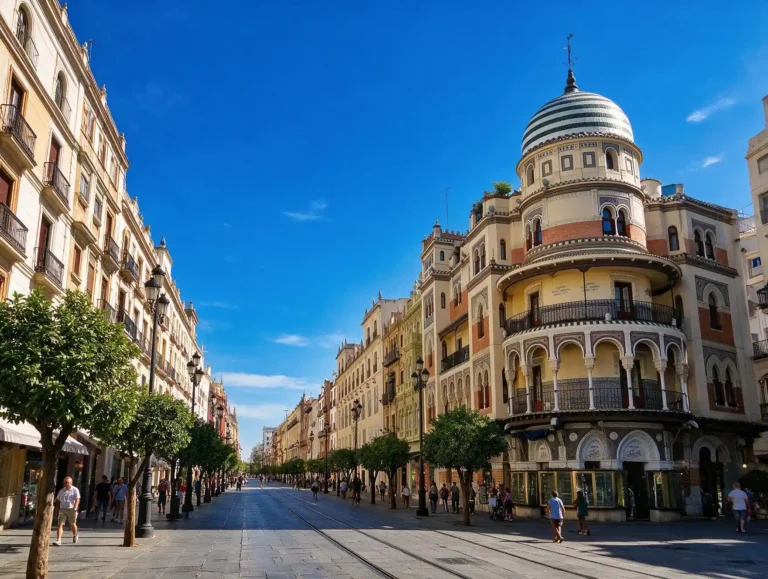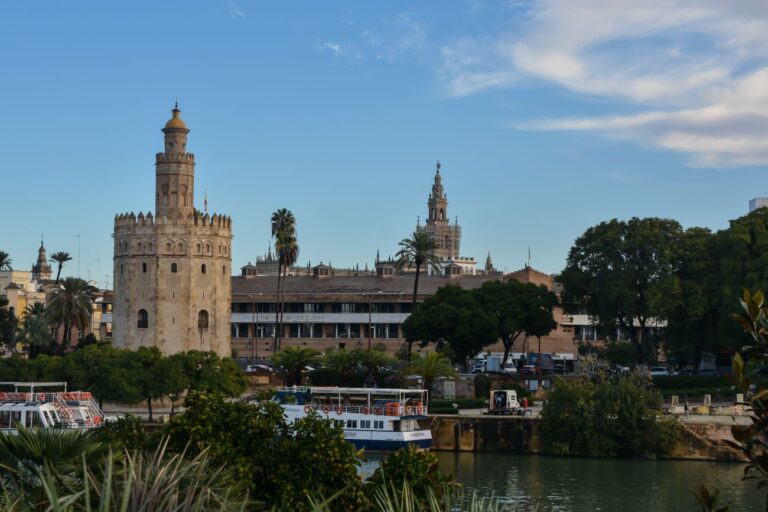
The Andalusian capital is one of the most visited cities in Spain. Its gastronomy and culture make it a very complete city to spend two or three days in. So if you're thinking of visiting Seville, here are the best things to do. routes to discover Seville with must-see places. Plus, if it's your first time in the city, we'll give you a few tips to help you avoid the long queues at the Alcázar and the Giralda.
We've also included special itineraries for each day if you'd like to experience Seville through your senses. Shall we begin?
Routes to discover Seville
How to get to Seville
If you arrive in Seville by AVE high-speed train or other train, Santa Justa station is about a 25-minute walk from the city's historic center. We recommend renting a holiday apartment in the center of Seville to be closer to the main attractions. Here is our list of holiday apartments in Seville, which are very well located and have a very good price-quality ratio.
If you have luggage, we recommend taking public transport to reach your accommodation. Or, if you prefer more comfort, you can book a transfer to the apartment and a driver will be waiting for you. Here you can Book transfers to the AVE train station or the airport.
If you arrive in Seville by car, you may have to park in a paid parking lot as it is usually quite difficult to find a spot in the city center.
Day 1 of the Seville itinerary: Seville Cathedral, Giralda, Royal Alcázar and Archive of the Indies
When the traveler arrives at the beautiful Giralda, he knows that the journey of his routes to discover Seville. At the foot of the bell tower is the entrance to Seville Cathedral. Inside are the Royal Chapel, which dates from 1951, and the dome of Hernán Cortés II, where the current patron saint of Seville, the Virgin of the Kings, canonically crowned in 1904, rests.
The remains of Christopher Columbus also rest in the Seville Cathedral, located in a tomb designed by Arturo Mélida in 1891.
During your visit, you can also admire numerous paintings by Spanish and international artists, representing the different historical periods depicted within these two hectares of culture and tradition. We also recommend a visit to the Sacristy of the Chalices. Here, Christian relics of significant religious value are kept. For Christians, it evokes a profound sense of devotion, and for non-Christians, a deep sense of historical and artistic curiosity. After your visit to the Cathedral, cross the Patio de los Naranjos (Courtyard of the Orange Trees) and then head towards the gate that leads to the Giralda, the former tower of the mosque upon which the Cathedral was built.
The Giralda is the name given to the bell tower of the Cathedral. Its lower two-thirds correspond to the minaret of the city's former mosque and date from the late 12th century, during the Almohad period, while its upper third is a later addition from the Christian era to house the bells. At its summit is a sphere called the tinaja, upon which stands the well-known Giraldillo. Its 101 meters in height offer visitors magnificent views of the city. Interestingly, the Giralda has no stairs, but rather 35 ramps. This was so that the sultan could ascend on horseback to admire the city.
The entrance fee to the Cathedral, which also grants access to the Giralda, is €9 (€4 for students under 25 or pensioners). Opening hours are 11:00 to 15:30 on Mondays, and 11:00 to 17:00 from Tuesday to Saturday. On Sundays, it is open from 14:30 to 18:00.
Just steps from the Giralda and the Cathedral lie the gardens of the Royal Alcázar, a place where peace and nature combine to make your visit truly unique. The Royal Alcázar is the oldest palace in Europe, a fact that made it the sixth most visited monument in all of Spain last year. The architectural complex, built in the High Middle Ages, includes various palaces and buildings, among which the Mudéjar Palace, the Casa de la Contratación (House of Trade), and the Alcázar Park are must-sees.
General admission costs €9.50, and opening hours are from 9:30 a.m. to 5:00 p.m. from October to March and from 9:30 a.m. to 7:00 p.m. from April to September. Here's a tip to avoid the huge queues at the Cathedral and the Alcázar: book a guided tour in Spanish, which includes the price of admission. You can buy them here. here And, in addition to visiting Seville's three most important buildings without queuing, it also includes a tour of Seville's Jewish Quarter. What more could you ask for?
The last stop on this route to discover Seville It is the most important documentation center from the colonial period, the Archive of the Indies, built on the site of a former merchants' house. Here are preserved the most important documents related to the conquest of the Americas. Although it is not open to the public, you can admire its beauty and immensity from the outside.
Day 2 of the Seville itinerary: Plaza de España, Maria Luisa Park, San Telmo Palace and Church of El Salvador
The second day of route to discover Seville It begins in the Plaza de España, which was built by Aníbal González for the Ibero-American Exposition of 1929. Have fun looking for your province on the different benches in the plaza so you can take a picture with it, and boast about being able to walk where Padme, Anakin and R2D2 walked in the movie "Episode VII: The Force Awakens" from the famous Star Wars saga.
Right next to Plaza de España you'll find Parque de María Luisa, an ideal place to relax before continuing your tour. Its extensive green spaces invite you to breathe fresh air and recharge your batteries for the rest of Seville.
The third stop on this second day of route to discover Seville It's the San Telmo Palace, a Baroque building constructed between the 17th and 18th centuries to house a naval academy. If you're very interested in visiting the interior, you must book your visit in advance by sending an email to the palace. Visiting days are only Thursdays, Saturdays, and Sundays.
And to conclude our route to discover Seville, Then head towards the Church of El Salvador, the second most important church to see in Seville after the Cathedral. Its construction dates back to the 18th century. Inside, the main altarpiece stands out as one of the most representative works of Sevillian Baroque, as does the altarpiece on the portal of the Blessed Sacrament Chapel. Both are the work of the architect Cayetano de Acosta. If you have your Cathedral ticket from the previous day, you will have free entry to the Church of El Salvador. You can visit it from September to June, Monday to Saturday from 11:00 to 18:00, and Sundays from 15:00 to 19:30, and in July and August from Monday to Saturday from 10:00 to 18:00, and Sundays from 15:00 to 19:30.
We hope this guide routes to discover Seville We hope this has been useful in preparing your ideal trip to the Andalusian capital. Below you will find a map showing the location of the monuments we have mentioned in our guide. routes to discover Seville.
Map of the main monuments
And if you're planning a summer visit to Seville, we advise you to take good note of these. Ten plans that will help you discover and enjoy Seville at this time of year.